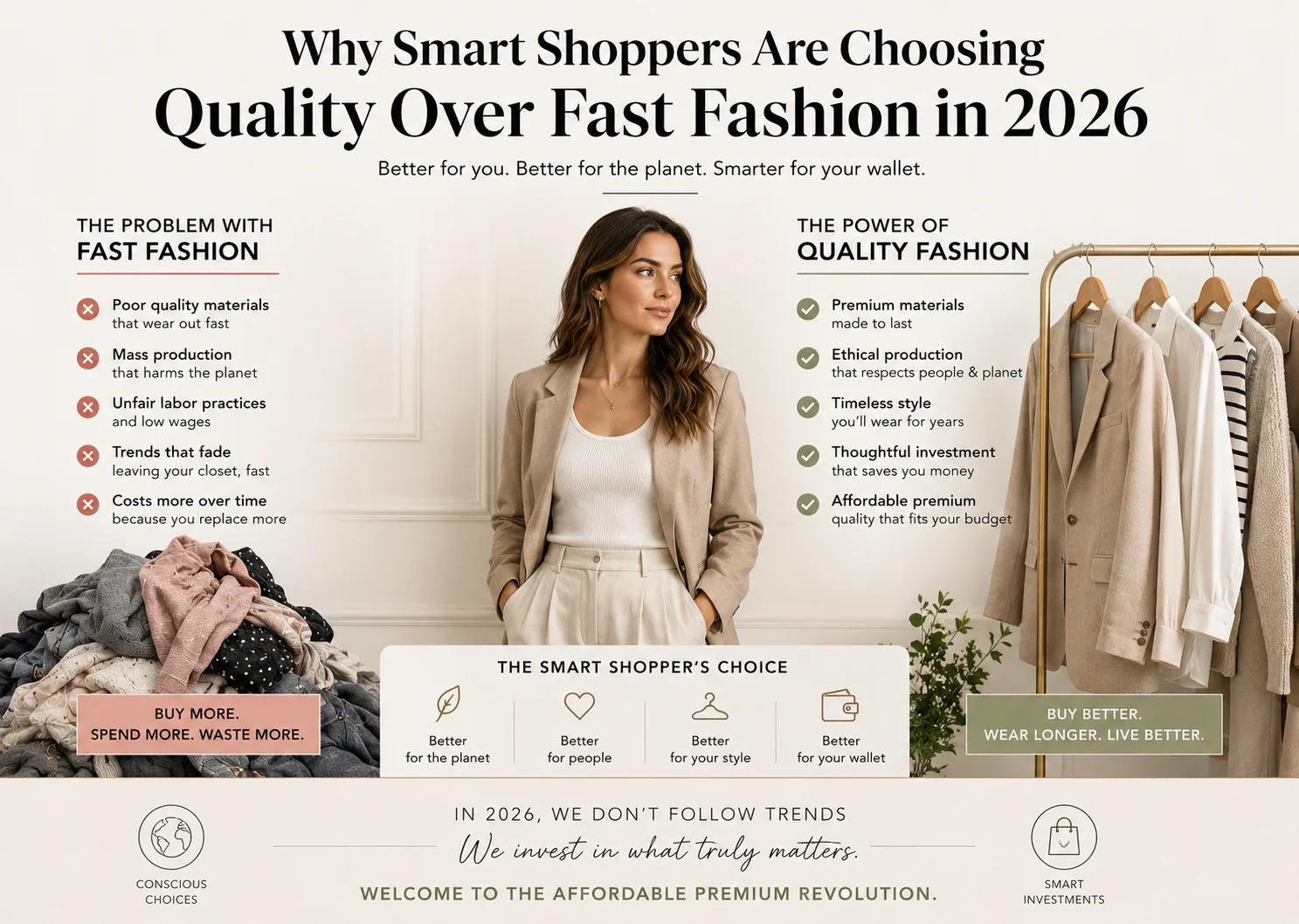
Why Smart Shoppers Are Choosing Quality Over Fast Fashion in 2026
The Fashion Wake-Up Call
Walk into any American mall today, and you’ll notice something has shifted. The stores that were packed five years ago — the ones selling $5 t-shirts and $15 dresses — are quieter now. Meanwhile, shoppers are spending more time browsing brands that offer something different: clothing that actually lasts.
This isn’t a coincidence. It’s a movement.
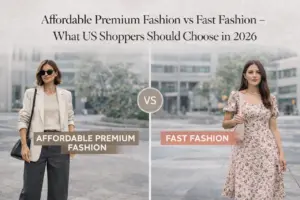
In 2026, American and European consumers are making different choices. We’re buying less, but we’re buying better. We’re asking tougher questions about where our clothes come from, how they’re made, and how long they’ll stay in our closets. And most importantly, we’re discovering that affordable premium fashion — clothing that balances quality with fair pricing — is the smartest investment we can make.
Welcome to the affordable premium revolution.
The Fast Fashion Hangover
Let’s be honest: most of us have been there. You see a trendy top online for $12. It looks great in the photos. You buy it. It arrives, you wear it twice, the seam splits, the color fades, and suddenly that “bargain” feels like a waste of $12 — and more importantly, a waste of your time.
This is the fast fashion hangover. And it’s costing us more than money.
Fast fashion brands like Shein, Zara, and H&M have built empires on the psychology of the impulse buy. Low prices lower our standards. Free returns remove the risk. Constant new arrivals create FOMO (fear of missing out). Before we know it, we’re spending $50 a month on clothes we barely wear — which adds up to $600 a year for a wardrobe we don’t even like.
The cruelest trick fast fashion plays is convincing us we’re saving money. In reality, we’re spending more than ever on items that were designed to be thrown away from the moment they were sewn.
The Hidden Costs of Cheap Clothing
When you buy a $10 t-shirt, you’re not just paying $10. You’re paying for:
- The environmental cost. Fast fashion produces 10% of global carbon emissions and creates 92 million tons of textile waste annually. Most of those cheap garments end up in landfills within a year.
- The time cost. Every time you replace a worn-out piece, you spend hours browsing, comparing, ordering, returning, and re-ordering. That time adds up.
- The confidence cost. Cheap fabrics don’t drape well. They wrinkle, pill, and lose shape. When you don’t feel good in what you’re wearing, it shows.
- The wardrobe cost. A closet full of fast fashion pieces that don’t coordinate with each other means you still feel like you have “nothing to wear” despite owning 100+ items.
The Numbers Don’t Lie
A 2025 McKinsey survey found that 67% of US consumers now consider durability a primary factor when purchasing clothing. The same study showed that the average American buys 60% fewer clothing items than in 2019 — but spends 40% more per item.
Meanwhile, a separate report by the Ellen MacArthur Foundation found that the average garment is worn only 7 to 10 times before being discarded. Seven to ten wears. For the price of a single coffee per wear, we’re sending clothes to landfills.
But Europe is leading the charge in the opposite direction. France, the Netherlands, and Sweden have passed legislation requiring fashion brands to be more transparent about their environmental impact and durability. The EU’s Strategy for Sustainable Textiles, rolled out in phases through 2026, requires that all textiles sold in the EU be durable, recyclable, and made with a minimum percentage of recycled fibers. This legislation is already reshaping how global brands design and price their products.
That’s the affordable premium mindset taking hold — and it’s being reinforced by policy.
What “Affordable Premium” Actually Means
There’s a lot of confusion around this term, so let’s define it clearly.
Affordable premium is not luxury. Luxury is about exclusivity, heritage brands, and price tags that reflect status more than quality. Affordable premium is different.
Affordable premium means:
1. Thoughtful Design
Every piece is designed with intention. Clean silhouettes. Versatile color palettes. Details that serve a purpose rather than adding visual noise. When you buy an affordable premium piece, someone has thought about how it will work in your wardrobe — not just how it will look on a mannequin.
2. Quality Materials
This doesn’t mean Italian cashmere or Japanese selvedge denim (though those are wonderful). It means choosing fabrics that perform: cotton with the right thread count, blends that hold their shape, materials that breathe and move with you. Affordable premium brands select fabrics for durability and comfort first.
3. Fair Pricing
The biggest myth is that quality clothing has to be expensive. Affordable premium brands achieve fair pricing by:
- Selling directly to consumers (no retail markup)
- Focusing on timeless designs (no seasonal waste)
- Producing in reasonable quantities (no overproduction)
- Building long-term customer relationships (not one-time transactions)
4. Longevity
This is the ultimate test. An affordable premium piece should look good after 30 washes, not 3. It should hold its shape, keep its color, and remain a staple in your wardrobe for years — not months.
The ROI of Buying Better
Let’s do some math that might change how you think about clothing purchases.
Scenario A: The Fast Fashion Shopper
- Buys 10 t-shirts at $15 each = $150
- Each lasts 3–6 months
- Annual replacement cost: $300–$600
- Wardrobe satisfaction: Low (constant disappointment)
- Environmental impact: High (20+ shirts in landfill per year)
Scenario B: The Affordable Premium Shopper
- Buys 5 t-shirts at $35 each = $175
- Each lasts 2–3 years
- Annual replacement cost: $60–$90
- Wardrobe satisfaction: High (loves every piece)
- Environmental impact: Low (minimal waste)
Over three years, the math is staggering:
| Fast Fashion | Affordable Premium | |
|---|---|---|
| Total spent (3 years) | $900–$1,800 | $175–$270 |
| Items owned | 30–60 (most unwearable) | 5 (all wearable) |
| Daily satisfaction | Low | High |
| Time spent shopping | 40+ hours/year | 5 hours/year |
The affordable premium shopper saves money, saves time, and feels better about what they wear every single day.
The Minimalist Wardrobe Connection
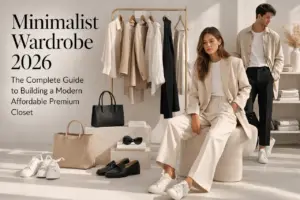
This brings us to one of the biggest style trends of 2026: the minimalist wardrobe.
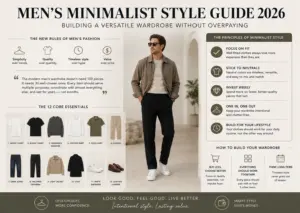
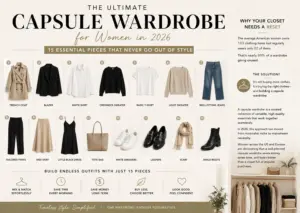
A minimalist wardrobe — also called a capsule wardrobe — is built on the affordable premium philosophy. Instead of owning 200 mediocre pieces, you own 30–40 excellent ones. Every item works with multiple others. Every piece earns its place.
The 80/20 Rule of Fashion
Here’s something fascinating: most people wear 20% of their wardrobe 80% of the time. That means 80% of your clothes are just taking up space.
When you build a minimalist wardrobe with affordable premium pieces, you’re essentially optimizing for that 20%. You’re choosing items that you’ll actually wear — and that you’ll enjoy wearing.
The Emotional Benefit
There’s also an emotional dimension that rarely gets discussed. A cluttered closet creates mental clutter. Decision fatigue. Guilt about unworn purchases. Anxiety about what to wear.
A minimalist wardrobe does the opposite. It brings clarity. Every morning, you open your closet and see pieces you love. Getting dressed becomes a pleasure, not a chore.
How to Start Shopping Smarter Today
Ready to join the affordable premium movement? Here’s your practical checklist:
Step 1: Audit Your Current Wardrobe
Take everything out of your closet. Try it on. Be honest. Keep only what fits well, flatters you, and makes you feel confident. Donate or sell the rest. This is the hardest step — and the most liberating.
Step 2: Identify Your Gaps
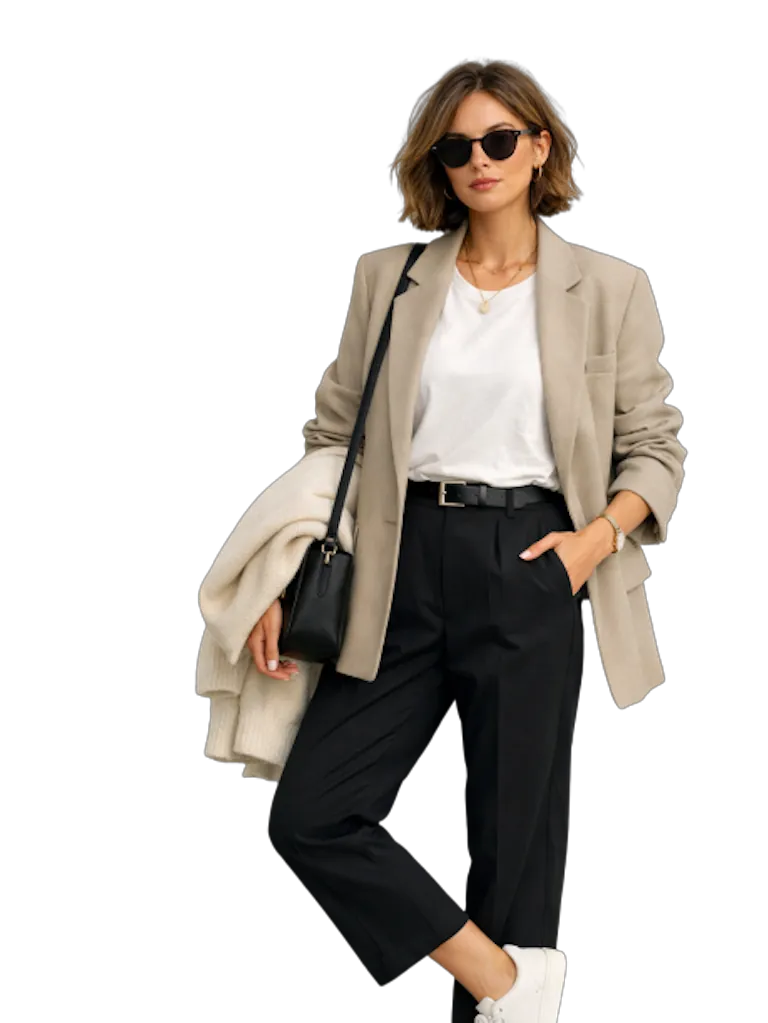
Once you’ve cleared the clutter, you’ll see what’s missing. Maybe you need a blazer that works for both meetings and dinner. Maybe you need quality t-shirts that don’t lose shape. Maybe a versatile handbag that transitions from work to weekend.
Step 3: Research Before You Buy
Before purchasing anything, ask five questions:
- What material is this made of?
- How does it fit with what I already own?
- Will I still want to wear this in two years?
- Is the price fair for the quality?
- Does this brand prioritize durability?
Step 4: Start with Staples
Build your foundation first. Invest in:
- Cotton t-shirts in neutral colors ($25–$40 each)
- A quality blazer that fits perfectly ($60–$90)
- Wide-leg or straight-leg trousers ($40–$60)
- A structured handbag for daily use ($50–$80)
- Versatile sneakers in a neutral colorway ($50–$70)
These five items will form the backbone of dozens of outfits.
Step 5: Enjoy the Process
This isn’t about deprivation. It’s about curation. Every purchase becomes intentional. Every item in your closet has a purpose. Shopping becomes less frequent but more satisfying.
Why Tomusho Believes in Affordable Premium
At Tomusho, we built our entire brand around this philosophy. We believe that looking good shouldn’t require a luxury budget. We believe that quality and affordability aren’t mutually exclusive. And we believe that the best fashion investment you can make is in pieces that last.
Every item in our collection — from our women’s blazers and satin blouses to our men’s oversized t-shirts and lifestyle sneakers — is designed with one goal: to become a permanent part of your wardrobe.
We use quality materials. We design for versatility. We price fairly. Because we’d rather sell you one jacket you love for five years than five jackets you tolerate for one season each.
Common Objections — Answered
“But I can’t afford quality clothing right now.”
This is the most common objection, and it’s understandable. When you’re on a tight budget, $35 for a t-shirt feels expensive when a $10 option exists. But here’s the reality:
If you have $100 to spend on clothes, you have two choices:
- 10 fast fashion items that last 3 months each = 30 months of wear total
- 3 quality items that last 2 years each = 72 months of wear total
The “expensive” option actually gives you more than double the value.
Start with one category at a time. Replace your t-shirts first (they’re the most-worn item). Then your jeans. Then your outerwear. Build gradually, and within a year, your entire wardrobe will have upgraded itself.
“But I get bored with the same clothes.”
Minimalist doesn’t mean monotonous. With a 40-piece wardrobe, you can still create variety through:
- Accessories — A new scarf, belt, or bag can transform an outfit
- Layering — The same pieces look different in summer vs winter
- Fits — Tucked vs untucked, rolled sleeves, knotted tops — small changes, big difference
- Seasonal rotations — Swap 10 items seasonally to keep things fresh
The goal isn’t to wear the same outfit. The goal is to love every outfit you wear.
“But what about trends? I want to stay current.”
You don’t need fast fashion to stay current. Most trends are recycled versions of past decades anyway. The most stylish people — whether it’s in New York, Paris, or Tokyo — don’t chase every trend. They develop a personal style and update it subtly each season.
With an affordable premium wardrobe, you add 2-3 new pieces per season. That’s enough to feel current without sacrificing your core quality.
The Bottom Line
The affordable premium revolution isn’t about spending less money. It’s about spending smarter money. It’s about recognizing that a $35 t-shirt that lasts three years is actually cheaper than a $12 t-shirt that lasts three months. It’s about realizing that a curated closet of 40 pieces brings more joy than an overflowing closet of 200 pieces you never wear.
In 2026, smart shoppers are making the switch. They’re choosing quality over quantity. They’re investing in pieces that last. They’re building wardrobes that reflect their values — style, comfort, and sustainability.
The question isn’t whether you can afford to buy better.
The question is whether you can afford not to.
Ready to start your affordable premium wardrobe? Explore Tomusho’s collection of women’s clothing, men’s clothing, handbags, and lifestyle sneakers — all designed for everyday confidence.



 by
by